بِسْمِ ٱللَّهِ ٱلرَّحْمَٰنِ ٱلرَّحِيمِ
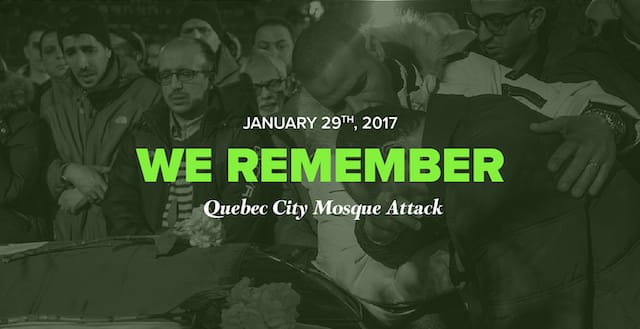
Each year, UMMSA Advocacy Week creates space on campus to confront Islamophobia not only as an abstract concept but as a lived reality with historical roots, political consequences, and real impacts on Muslim communities. Advocacy Week 2026 was dedicated to honouring the victims of the January 29, 2017, mosque attack in Sainte-Foy, QC while equipping students with tools to understand, report, and challenge Islamophobia in meaningful ways.
Through tabling, discussion spaces, halaqas, and a Townhall forum, the week emphasized a central message: addressing Islamophobia requires more than awareness; it requires sustained action, institutional engagement, and collective responsibility.
Remembering January 29
At the heart of Advocacy Week is remembrance. On January 29, 2017, six Muslim men were killed and 19 injured while praying at the Quebec City Mosque. The anniversary of this day honours their lives and legacies, while efforts are made to recognize that Islamophobia continues to shape Muslim experiences across Canada today.
This act of remembrance is not just symbolic; it grounds the week’s programming in a commitment to preventing further harm by addressing the conditions that allow Islamophobia to persist.
Creating visible spaces on campus
Throughout the week, tabling sessions and engagement activities were hosted across campus, creating accessible points of conversation for students, staff, and faculty. These spaces allowed for informal dialogue, resource sharing, and visibility, particularly for students who may not attend formal events but are nonetheless impacted by Islamophobia.
A Read & Chat session and halaqa further encouraged reflective discussion, connecting personal experiences to broader social and ethical questions.
Islamophobia Townhall: from history to systems
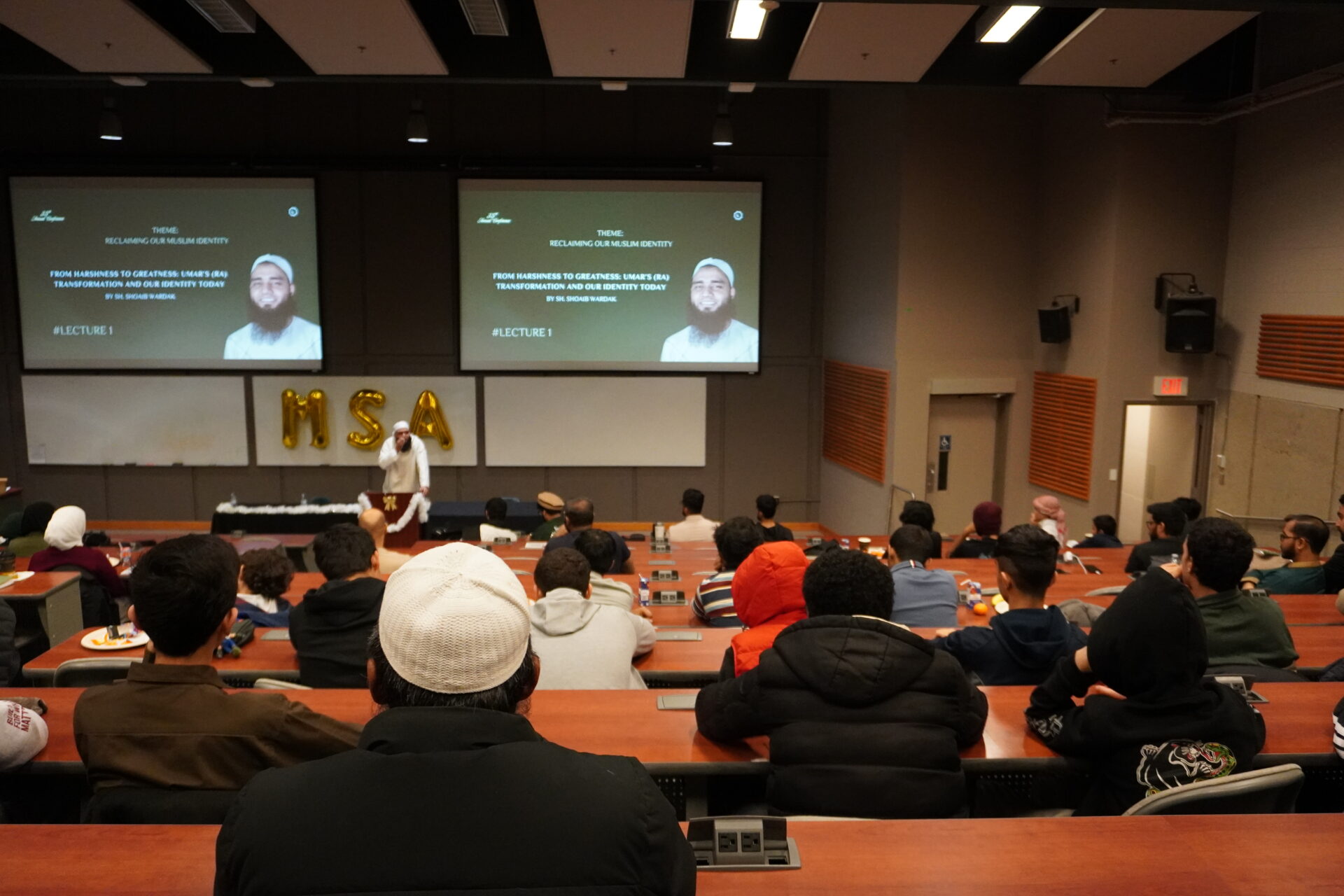
The Advocacy Week Townhall brought together scholars, advocates, faith leaders, and student leadership to examine Islamophobia as both a historical phenomenon and a contemporary system of power.
Historical and structural framing
The Townhall opened with reflections from Dr. Youcef Sufi, a researcher on Islamophobia, a historian, and the author of Homegrown Radicals. He situated Islamophobia within a global and historical context, emphasizing that anti-Muslim hatred often intensifies alongside geopolitical conflict and media narratives that dehumanize Muslims abroad and render them suspect at home.
Drawing on experiences supporting Muslim students on Canadian campuses, he highlighted how global events reverberate locally, shaping feelings of vulnerability, belonging, and safety.
Reporting, data, and advocacy
Sadaf Ahmed, Advocacy Officer with the National Council of Canadian Muslims (NCCM), focused on the practical dimensions of advocacy. She outlined the importance of reporting Islamophobic incidents through formal mechanisms that protect confidentiality and consent, stressing that underreporting weakens the ability of communities to advocate for policy change.
She emphasized that advocacy is not merely moral persuasion, but a strategic process involving data, political pressure, and long-term engagement. Civic participation, she noted, is transactional: systems respond when communities are organized and persistent.
Institutions, safety, and their limits
A critical institutional perspective was offered by Hee-Jung Serenity Joo, Director of the University of Manitoba Institute for the Humanities (UMIH). Dr. Joo challenged the assumption that institutions alone can guarantee safety, pointing to how Islamophobia became embedded in systems of policing, surveillance, and governance following the events of 9/11.
While acknowledging the value of policy and reporting, she highlighted the importance of informal networks of care, solidarity, and resistance, spaces where marginalized communities have historically created safety when institutions fall short.
Faith, accountability, and collective strength
Muaaz Jatt, former MIA Board Member and local khateeb, addressed Islamophobia from a faith-based and community perspective. He emphasized that Islamophobia often grows when left unchallenged and warned against responding only after a tragedy occurs.
He also underscored the importance of internal accountability, noting that division within Muslim communities can weaken collective responses. Living as a minority in Canada, he argued, brings both challenges and opportunities for open advocacy.
Student leadership and responsibility
The Townhall concluded with reflections from UMMSA leadership, reinforcing that advocacy does not end with a single event.
Adil Hayat, External Relations for the 2025-2026 term, highlighted the importance of sustained relationship-building with institutional and community partners. Advocacy, he noted, requires consistent presence and strategic engagement beyond moments of visibility.
President Faisal Shamim Zahed reaffirmed that confronting Islamophobia is a core responsibility of Muslim student leadership. He emphasized pride without apology and the necessity of showing up consistently, even when advocacy is uncomfortable.
Together, their remarks reinforced a defining message of Advocacy Week: meaningful change is built through continuity, accountability, and collective effort.
Reporting Islamophobia: Turning experience into action
A recurring theme throughout Advocacy Week was the importance of reporting Islamophobic incidents, even when they may seem minor or ambiguous. Islamophobia is often underreported, which limits the ability of communities and advocacy organizations to identify patterns, advocate for policy change, and hold institutions accountable.
Students and community members who experience or witness Islamophobia are encouraged to document and report incidents through established channels that prioritize confidentiality, consent, and support.
Reports can be submitted to the following organizations:
National Council of Canadian Muslims (NCCM)’s national incident reporting and legal review (here)
Manitoba Islamic Association (MIA) Islamophobia Committee’s provincial support and community advocacy (here)
Reporting does not obligate individuals to pursue legal action. Information is never shared or escalated without consent. Even when no immediate action follows, reports contribute to the data needed to advance advocacy, influence public policy, and strengthen protections for Muslim communities.
Advocacy Week emphasized that reporting is not only a personal step but also a collective act that helps ensure that Islamophobia is recognized, addressed, and challenged at the institutional and societal levels.
Looking forward
Advocacy Week 2026 demonstrated that confronting Islamophobia requires work at multiple levels, including personal, communal, institutional, and political. By combining remembrance with education, reporting, and strategic advocacy, we continue to create spaces where Muslim students are not only seen and heard but also empowered, in shaa Allāh.
Advocacy Week is not a conclusion; it is a commitment to ongoing presence, informed action, and collective responsibility on campus and beyond.
See our Instagram Highlights from Advocacy Week 2026 here.
Learn more about NCCM’s Green Square Campaign here.